I have been lying to you about El Salvador
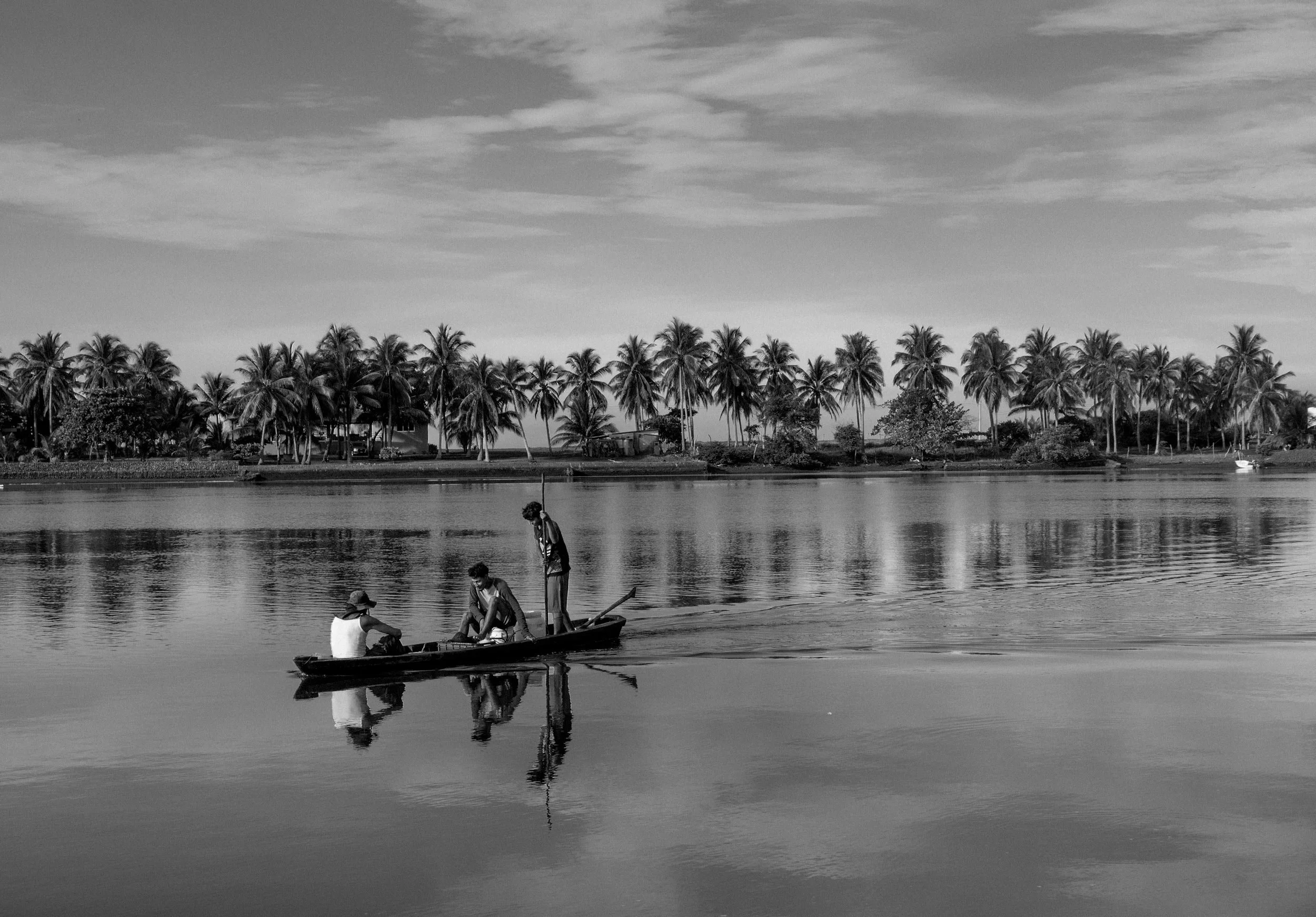
Pescadores Bahía Jiquilisco
ENGLISH VERSSION I VERSION ESPAÑOL ABAJO
I have lived on the coast of La Libertad for a little over seven years. After two decades of surfing along its beaches, a friend’s decision to open a small hotel in Playa El Zonte changed the course of my life. What began as a simple exchange, a few hours of work in return for a room, gradually turned into a permanent move to the beach after the pandemic.
What drew me in at first was not only the ocean, but also my friend’s belief when he opened the hotel: that it was worth showing the world how beautiful El Salvador truly is, despite the narrative of violence that defined the country at the time.
We were not alone in that mission. Many people believed the same thing: that if the world could see what we saw, they would fall in love with this place.
So we began. We shared photographs and videos of waterfalls hidden in lush forests, endless beaches glowing under golden sunsets, pine-covered mountains, friendly dogs wandering small towns, and the warmth of people who welcome strangers like family. We highlighted the landscapes, the energy, and the sense of discovery that make El Salvador extraordinary.
But in telling that story, we were also leaving something out.
We unintentionally sold a simplified version of reality — the idea that El Salvador is only beauty. That every waterfall flows with crystal-clear water untouched by human impact. That the child selling snacks on the roadside will have enough to eat that night. That the beaches are pristine, even when rivers carrying waste from upstream communities empty into the sea beside them.
We omitted these truths because we believed the country first needed a reason to come.
In 2022, that perspective began to shift for me.
Together with Aine, a social worker who had spent years working in nearby communities, we walked through areas just minutes away from El Zonte. That single walk gave me a clear view of a reality I suspected, but hadn't seen with my own eyes.
We met families who walk one or two hours daily to access drinking water. Students who spend up to eight hours commuting each day just to attend university. Households still dependent on latrines for basic sanitation. What began as visits to a few families quickly revealed itself as a broader reality surrounding many of the country’s most visited destinations.
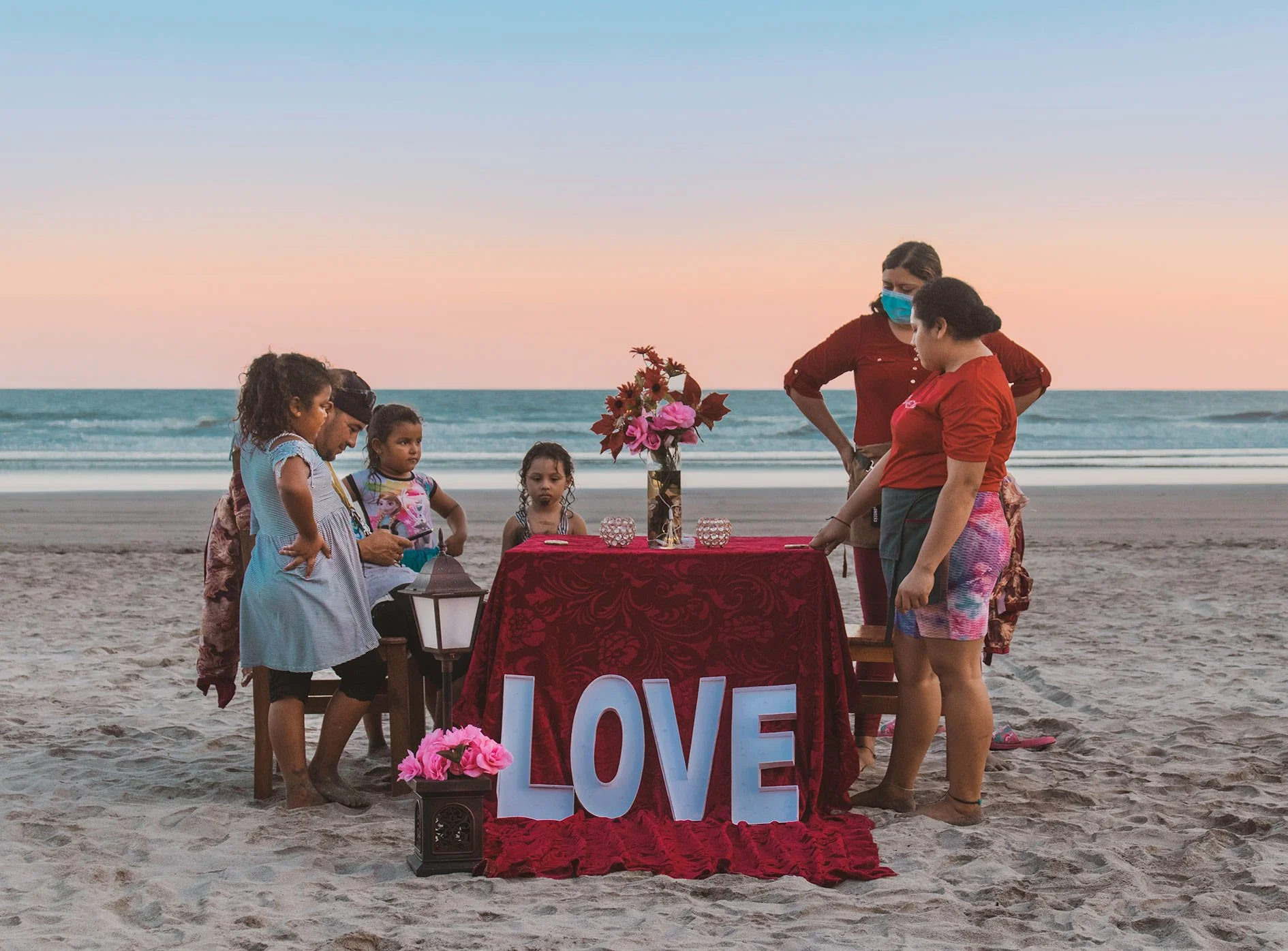
Familiy celebrating valentines day in Playa Las Flores
Behind the natural beauty exists another story — a human one.
Most tourism areas face overlapping challenges: limited educational opportunities, food insecurity, restricted access to clean water, and inadequate waste management systems. These realities exist not far from the landscapes we proudly promote.
El Salvador today still has two faces. One is natural — breathtaking, vibrant, and full of adventure. The other is human — resilient, hopeful, and still in need of resources to build a more stable future.
For years, we focused almost exclusively on the first story while leaving the second untold. Yet I have come to believe that many visitors, if invited to understand both realities, would not turn away. On the contrary, they would feel a deeper connection to the places and communities that welcome them.
There is an opportunity to redefine tourism, not as consumption, but as participation.
A conscious, ethical, and sustainable tourism model can exist, one that allows visitors to experience beauty while also understanding the responsibility of its preservation. For the most part it already happens among people who have moved to coastal communities in recent years. Quietly and without recognition, many contribute in personal ways to support their neighbors and address local needs.
El Salvador is clearly in a period of transition. Investment in infrastructure is growing, and tourism is expanding rapidly. Yet development remains concentrated in specific areas, and national resources alone cannot address every challenge faced by local communities.
This reflection is not a criticism of tourism or of those who work within it. I am one of them. For years, I helped promote a single narrative, creating images that showcased only the natural side of the country. Instead, this is an invitation to tell the complete story. To transform visits into exchanges. To create experiences where connection extends beyond the moment a photograph is taken or a wave is surfed.
Some operators are already moving in this direction. Guides visiting San Antonio Waterfall near San Diego, for example, now include carrying trash bags as part of the excursion, inviting visitors to remove a small portion of waste from the area. It is a small gesture, not a complete solution, but one that builds awareness and responsibility.
Change rarely begins with large systems. It often begins with perspective.
If tourism in El Salvador can evolve to embrace both its natural and human stories, it can become something more meaningful, an ecosystem where visitors are not only observers, but participants in preservation and progress.
I want to believe that most people, when given the opportunity, choose to care. That with small actions multiplied across many individuals, meaningful change becomes possible.
I hope the future of tourism here is not about showing a perfect paradise, but about inviting people into a real one, beautiful, imperfect, and worth protecting together.
He estado mintiendo sobre El Salvador
He vivido en la costa de La Libertad por poco más de siete años. Después de dos décadas surfeando por sus playas, la decisión de un amigo de abrir un pequeño hotel en Playa El Zonte cambió el rumbo de mi vida. Lo que comenzó como un simple intercambio, unas horas de trabajo a cambio de una habitación, gradualmente se convirtió en una vida completa en la playa catalizada por la pandemia.
Lo que me atrajo al principio no solo fue vivir en el mar, sino también compartir la motivación de mi amigo al abrir su hotel: que valía la pena mostrarle al mundo lo verdaderamente hermoso que es El Salvador, a pesar de la narrativa de violencia que definía al país en ese momento.
No estábamos solos en esa misión. Muchas personas creían lo mismo: que si el mundo pudiera ver lo que nosotros veíamos, se enamoraría de este lugar.
Así comenzamos. Compartimos fotografías y videos de cascadas escondidas entre bosques frondosos, playas infinitas iluminadas por atardeceres dorados, montañas cubiertas de pinos, perros amigables recorriendo pequeños pueblos y la calidez de personas que reciben a los extraños como si fueran familia. Mostrábamos los paisajes, la energía y esos detalles que hacen de El Salvador un lugar extraordinario.
Pero al contar esa historia, también estábamos dejando algo fuera.
Sin mala intención, vendimos una versión simplificada de la realidad: la idea de que El Salvador es solo belleza. Que cada cascada fluye con agua cristalina intacta por el impacto humano. Que el niño que vende collares a la orilla del camino tendrá suficiente para comer esa noche. Que las playas son completamente limpias, habiendo al lado ríos que arrastran desechos desde comunidades arriba.
Omitimos esas verdades porque creíamos que el país primero necesitaba una razón para que la gente viniera.
En 2022, esa perspectiva comenzó a cambiar para mí.
Junto a Aine, una trabajadora social que llevaba años trabajando en comunidades cercanas, caminamos por zonas ubicadas a solo minutos de El Zonte. Esa sola caminata me permitió ver con claridad una realidad que sospechaba, pero que nunca había observado con mis propios ojos.
Conocimos familias que caminan una o dos horas diarias para acceder a agua potable. Estudiantes que pasan hasta ocho horas al día trasladándose para poder asistir a la universidad. Hogares que aún dependen de letrinas para el saneamiento básico. Una pequeña visita a unas pocas familias rápidamente reveló la realidad que rodea muchos de los destinos más visitados del país.
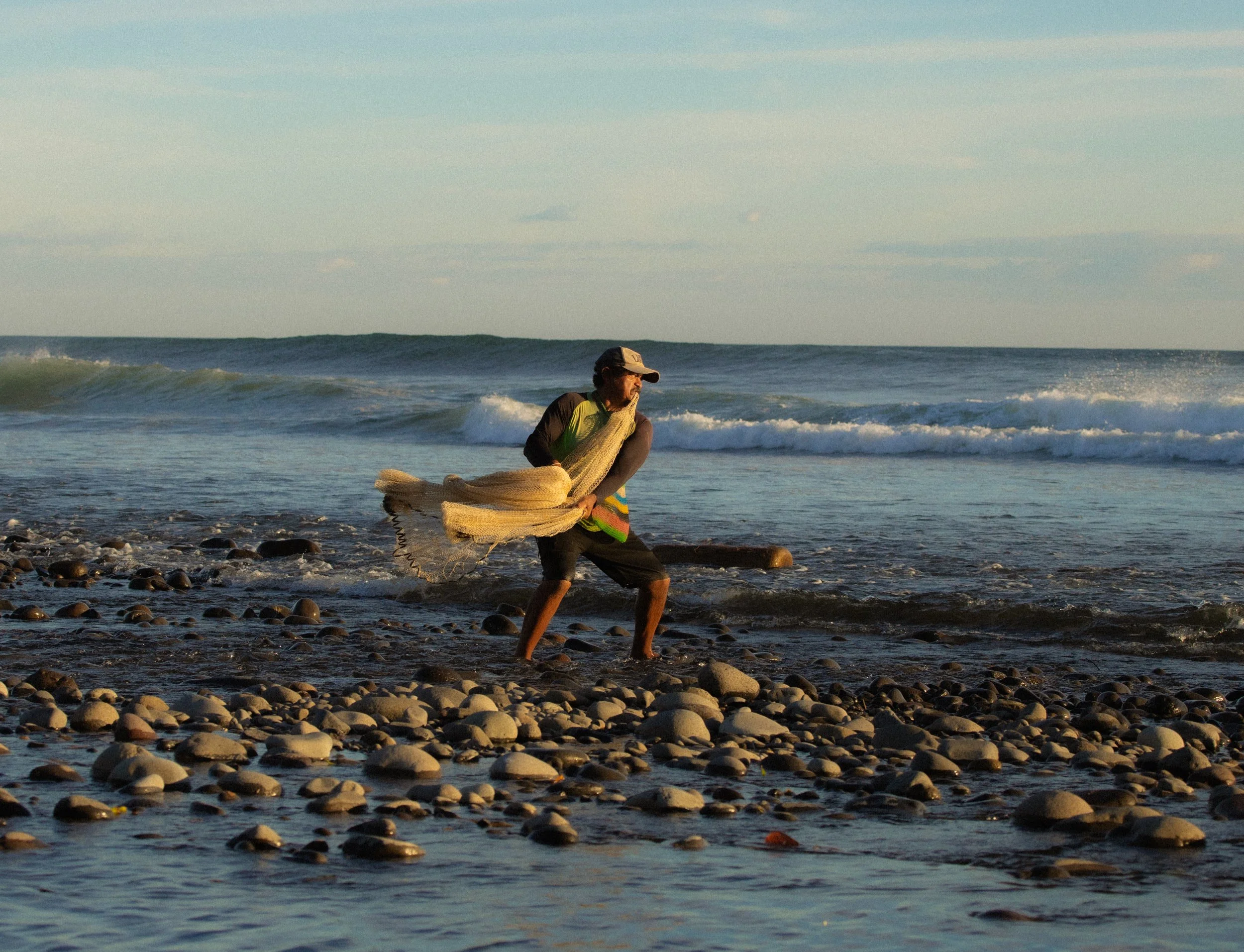
Pescadores en Bahía de Jiquilisco
Detrás de la belleza natural existe otra historia: una historia humana.
La mayoría de nuestras zonas turísticas enfrentan desafíos similares: oportunidades educativas limitadas, inseguridad alimentaria, acceso restringido al agua potable y sistemas deficientes de manejo de desechos. Estas realidades existen no muy lejos de los paisajes que orgullosamente promovemos.
El Salvador hoy sigue teniendo dos caras. Una es natural — impresionante, vibrante y llena de aventura. La otra es humana — resiliente, esperanzadora y aún necesitada de recursos para construir un futuro más estable.
Durante años nos enfocamos casi exclusivamente en la primera historia, dejando la segunda sin contar. Sin embargo, he llegado a creer que muchos visitantes, si fueran invitados a comprender ambas realidades, no dudarían en involucrarse. De hecho, desarrollarían una conexión más profunda con los lugares y las comunidades que los reciben.
Existe una oportunidad de guiar el turismo, no solo al consumo, sino también a la participación.
Puede existir un modelo de turismo consciente, ético y sostenible, uno que permita a los visitantes experimentar nuestra belleza y también comprenden las necesidades del entorno. En cierta parte, esto ya sucede entre personas que se han mudado a comunidades costeras en los últimos años. De manera silenciosa y sin reconocimiento, muchos contribuyen personalmente a apoyar a sus vecinos y atender necesidades locales.
El Salvador se encuentra claramente en un período de transición. La inversión en infraestructura está creciendo y el turismo se expande rápidamente. Sin embargo, el desarrollo continúa concentrándose en áreas específicas, y los recursos nacionales por sí solos no pueden resolver todos los desafíos que enfrentan las comunidades locales.
Esta reflexión no busca criticar al turismo ni a quienes trabajan dentro de él. Yo soy uno de ellos. Durante años ayudé a promover una sola narrativa, creando imágenes que mostraban únicamente el lado natural del país.
Más bien, esta es una invitación a contar la historia completa. A transformar las visitas en intercambios. A crear experiencias donde la conexión vaya más allá del momento en que se toma una fotografía o se surfea una ola.
Algunos ya están avanzando en esa dirección. Por ejemplo, guías que visitan la cascada San Antonio, cerca de San Diego, ahora incluyen llevar bolsas de basura como parte de la excursión, invitando a los visitantes a retirar una pequeña porción de los desechos del lugar. Es un gesto pequeño, no una solución completa, pero sí uno que genera conciencia y responsabilidad.
El cambio rara vez comienza desde grandes sistemas. Muchas veces comienza con una nueva perspectiva.
Si el turismo en El Salvador logra evolucionar entrelazando tanto su historia natural como su historia humana, puede convertirse en algo más significativo: un ecosistema donde los visitantes no sean solo observadores, sino participantes en su preservación y progreso.
Quiero creer que la mayoría de las personas, cuando se les da la oportunidad, eligen involucrarse. Que pequeñas acciones multiplicadas entre muchos pueden generar cambios reales.
Espero que el futuro de nuestro turismo no solo se enfoque en mostrar un paraíso perfecto, sino en invitar a las personas a un paraíso real: hermoso, imperfecto y digno de ser protegido de forma conjunta.